Reglas 360
The 360 Softball Europe rules are based on the current USSSA Softball Rule Book, Current USSSA Softball Playing Rule. For rules that are not explicitly written on this page, the current USSSA Softball rules apply – see: https://softballeurope.com/downloads/
For tournaments/leagues that are not qualifiers or ESSC Championship tournaments, rules may differ, but this must be officially announced in good time before the tournament.
The following rules/clarifications have been added:
- March 16, 2025: The protest rule has been extended with the first paragraph and the introduction of a protest fee.
The following rules are based on the version dated March 16, 2025
INSURANCE WAIVER
Only teams that have signed the insurance waiver are allowed to participate in the 360 tournaments/leagues. You can find the insurance waiver under Downloads.
BALLS
For all tournaments only USA (ASA) Softball certified .52 COR, 300 MAX. are allowed. The 12-inch size ball will be used for male batters and 11-inch size ball for female batters.
All tournaments are generally hit your own balls, unless otherwise specified by the organizer.
For the ESSC SuperCup in October in Regensburg, Germany the following balls are allowed:
Legal USSSA 12″ Pro M
Teams using (ASA) USA Softball bats with USSSA balls do so at their own risk!
Any ball that is discovered in play or any ball attempting to be introduced into the game which is not an approved ball, shall be immediately replaced with an approved ball.
EFFECT: For a first offense, the umpire will remove the ball from play and issue a warning to the offending team. The second offense in the game will result in the batter being out and the manager being ejected from the game. Any and all previous play shall stand. The pitcher must identify the approved ball for this event prior to pitching the ball, or request umpire assistance with identifying the ball.
BAT GUIDELINES
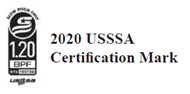
All bats must have an ASA/USA THUMBPRINT. For the 2024 season legal USSSA (240 standard) bats are also permitted.
Tournament directors reserve the right to remove any bat we feel is altered, damaged, or made to enhance ball/bat performance. We will take the bat for that game and return it upon the end of the game with mutual understanding it will not be used for the remainder of the tournament. If the bat is caught being used a second time, the player using the bat at that time will be ejected from the tournament and will be asked to leave the park/complex. If a player refuses to give up the bat for the rest of the game, he/she will be removed from the tournament and park/complex too.
ILLEGAL BATS: Bats that are found to be illegal must be removed from the dugout at once and will not be returned until the tournament is over.
UNIFORM RULE
Only baseball or softball hats are allowed. In general, players should have the same team jerseys with a number. For teams that do not have uniforms for a tournament due to circumstances, the following exceptions may be granted by the tournament director: uniforms don’t have to be the same colors if they have a number. Uniforms can be a T-SHIRT with numbers written with black sharpie. NO TAPE. Any shirt/jersey with a number can be used if no-one on the team has an identical number. Any team member with an identical number must identify himself or herself to the umpire, prior to the start of the game.
TEAM ROSTER
Players must be registered online for all qualifier tournaments. For Privacy Policy (player data) see link
For all other tournaments, whether online registration is required will be determined and announced individually by the host organizaiton.
In the case of online registration, the following rule applies:
If a player who is not registered online takes part in a tournament, the player will be considered an ineligible player. The player will be blocked until an activation fee of EUR 20 is paid to 360 Softball Europe and all previous games played which included the player will be a forfeit.
There are extended or specific regulations for the qualification of the ESSC SuperCup, the ESSC EuroCup and the ESSC Women’s Qualification.
Women may also be on the men’s team roster and play in the men’s tournaments. There is no gender restriction but men may not participate on a women’s team.
LINE UPS
45 minutes prior to the team’s scheduled game time, teams must have completed their lineup and submitted. The lineup must include the last name and the full first name as well as jersey number.
Important: The position of the pitcher is required!
The line-up must include starters and bench players.
A maximum of 12 players (ten defensive players and two extra hitters) are allowed to bat.
SCORING GAMES
If an official scorer is available, the documentation of the scorer applies primarily. The official 360 scoring sheet must be used by the teams to clarify any discrepancies (download the sheet).
If no official scorer is available, the “HOME TEAM” keeps score of the game with the official 360 score sheet (download the sheet). Only the offical 360 score sheet counts for scoring the game and in the event of discrepancies!
The umpires will obtain “FINAL SCORE” of the game and annotate the board, where the games are, and teams are listed. If there are any discrepancies the umpire must be notified in the same inning, and it can ONLY be addressed by the manager / head coach of the team. If not, then no discrepancy will be addressed.
DUGOUT RULE
All players, coaches and team members must stay in the dugout or in an out of play area. Only two (2) on deck hitters are allowed.
No music is allowed in the dugout!
CONFERENCE RULE
1. A conference refers to when a team representative requests a suspension of play or delays the game for the purpose of delivering a message to another team member, unless the pitcher is removed from the pitching position.
2. Pitcher: Any second conference with the same pitcher in an inning will require the removal of that pitcher from that position for the remainder of the game.
3. Offensive Conference: There shall be only one charged conference between team representatives and the batter, another team representative, and/or runners in an inning. The umpire shall not permit any such conferences in excess of one in an inning.
4. Defensive Conference: There shall be only three (3) charged conferences with any defensive players in a seven inning game and two (2) charged conferences for time limited games. For every inning beyond seven, there shall be one charged conference per inning.
EFFECT: The third (time limited games) or fourth (7 inning game) and each additional, charged conference, or for any charged conference in excess of one per inning in an extra inning game, shall result in the removal of the pitcher from the pitching position for the remainder of the game. The removed pitcher can play another position on defense but cannot pitch again.
PITCHING RULE
1. AT THE BEGINNING of a game or when a pitcher relieves another pitcher, not more than one minute may be used to deliver not more than THREE (3) WARMUP PITCHES to the catcher or some other teammate.
After the 3 warmup pitches are delivered, the ball must be thrown immediately back to the pitcher without any throws to any other players. Every throw after the warmup pitches will result in a ball to the batter.
Between all other innings, no warmup pitch will be permitted.
2. The pitched ball must be released within 5 seconds from the time the pitcher has the ball, and the batter has taken his position in the batter’s box. From this point, the umpire shall not give a call or signal for “time” unless something unusual occurs.
3. Pitcher must face home plate on delivery of pitch. The pitcher must have one foot in contact with the pitching rubber. Preliminary to pitching, the pitcher shall take a position with his/her pivot foot firmly on the ground and in contact with the pitching plate. The pivot foot must be in contact with the pitcher’s plate when the pitched ball is released.
The other foot (free foot) has no restriction on position and may be placed on, in front of, to the rear of, or to the side of the pitcher’s plate. After taking the initial position, the pitcher may take more than one step with the free foot, in any direction of his choice, provided that it is taken prior to, simultaneously with or during the actions of delivering the pitched ball.
4. After assuming the pitching position on the pitcher’s plate, the pitcher must present the ball in FRONT OF HIS BODY (for at least one second) in either one or both hands before starting the delivery motions. After the release of the pitch, there are no restrictions on pitcher’s subsequent movements or the fielding positions he may assume as a defensive player.
5. The ball must be pitched in a definite underhanded motion at slow speed. The pitched ball must arc at least 3 feet (1 meter) after leaving the pitcher’s hand and before it passes any part of home plate. The pitched ball shall not rise higher than 10 feet (3 meters) above the ground.
6. The umpire shall warn a pitcher who delivers a pitch with EXCESSIVE SPEED that repeating such EXCESSIVE SPEED PITCH will cause the pitcher’s removal from the pitcher’s position for the remainder of the game. A pitch that does not arc the full 3 feet as required (flat level pitch) may not be an EXCESSIVE SPEED PITCH, but merely an unfairly delivered pitch.
7. Illegal Pitcher’s Actions include and awards a ball to the batter:
a) Holding the ball by the pitcher longer than 5 seconds.
b) Throwing the ball by the pitcher to any fielder, unless making preliminary warm-up pitches or making an effort to complete an appeal play, or while the ball is dead.
c) After a pitch is made, throwing the ball by the catcher to any fielder except the pitcher, unless the pitch results in an out.
8. Any second conference with the same pitcher in an inning will require the removal of that pitcher from that position for the remainder of the game.
9. The pitcher may not use any foreign substance on the pitching hand or fingers.
BATTER RULE
1. Each batter starts with a 1 – 1 count (one strike and one ball), with NO courtesy foul. A caught foul ball on the “strike three” is a live ball and runners can try and advance.
2. Batter Position: The batter may take his proper position after a pitch (within 10 seconds) and regular ball and strike count shall continue. When the batter delays entering the batter’s box after the umpire signals play ball. After 10 seconds the umpire shall declare dead ball and a strike shall be called on the batter.
The batter must take an initial position with his back foot no further forward than a line defining the front edge of home plate.
The umpire shall not give a call or signal for “TIME” when a batter steps out of position after a pitcher has started his delivery motions.
3. The strike zone is only that part, or any part of the area, over home plate that is lower than the top of the batter’s highest shoulder, or higher than the bottom of his FRONT KNEE.
4. STRIKE IS CALLED BY THE UMPIRE:
a) For each fairly delivered pitched ball by the pitcher that passes through the strike zone before touching the ground. Each pitch should be adjudged according to the height of any part of the ball as it is crossing only above or over any part of the home plate. Any individual who repeatedly argues balls and strikes will be ejected.
b) For each pitch struck at and missed by the batter.
c) For a batted ball striking the batter, while he is in the batter’s box with no strikes.
d) For each foul tip. The batter is out if this is the second strike.
e) For a foul ball not caught on the fly with no strikes.
f) The umpire shall not give a call or signal for “TIME” when a batter steps out of position after a pitcher has started his delivery motions.
EFFECT: If the pitcher pitches, the umpire shall call “STRIKE” on each such pitch. The batter may take his proper position after any such pitch (within 10 seconds) and regular ball and strike count shall continue.
g) When the batter delays entering the batter’s box after the umpire signals play ball. After 10 seconds the umpire shall declare dead ball and a strike shall be called on the batter.
5. BALL IS CALLED BY THE UMPIRE on each pitch not swung at by batter if:
a) The pitched ball does not enter the strike zone.
b) The ball strikes the ground before passing completely across home plate, or any part of the plate.
c) A pitched ball strikes any part of home plate.
d) Any unfairly delivered pitch is made and not struck at.
e) There is an illegal pitcher action.
f) A pitched ball is not released within 5 seconds from the time the pitcher has the ball and the batter has taken his position in the batter’s box.
g) The catcher fails to return each pitch that is not hit directly to the Pitcher.
6. THE BATTER IS OUT
a) He bats illegally.
b) He hits the ball with an illegal or altered bat. The umpire must discover this illegal action before the next pitch, either by observation or because of an appeal from the defensive team.
c) He has a thrid strike.
d) If he hits a foul ball after two strikes.
d) If he steps on home plate when contacting the ball during hitting.
e) He steps across the plate with the pitcher in pitching position.
d) if he bunts or chops the ball deliberately downward (either fair or foul).
BUNT refers to a batted ball that is intentionally met with the bat and tapped slowly.
CHOPPED BALL is a batted ball that the batter strikes downward so that it hits the ground within the infield, with a deliberate attempt and downward chopping motion with the bat
f) … For further scenarios, see USSSA Rules 2025)
STRIKE ZONE
The strike zone is only that part, or any part of the area, over home plate that is lower than the top of the batter’s highest shoulder, or higher than the bottom of his FRONT KNEE.
The following presentation is copyright of USSSA:
APPEAL PLAY
1. APPEAL PLAY refers to a play in which the umpire cannot make a ruling until a decision is requested by the defensive or offensive team. This appeal must be made before the next legal pitch, intentional walk, illegal pitcher action or before all fielders have left fair territory.
2. APPEALING WHILE THE BALL IS LIVE (before umpire calls “time”): Any fielder can appeal a runner once. During a live ball appeal, the defensive team must verbally state their appeal and touch the runner or the base which they are appealing. Ball is live and all runners may advance with liability of being put out.
3. APPEALING AFTER BALL IS DEAD: Umpire signals “play ball”; the pitcher announces which runner and base he is appealing. The ball is now live only for the purpose of making an appeal.
EFFECT:
a) The defensive team can have only one attempted appeal per runner.
b) No runner may advance on an appeal play after time has been called.
c) No runner is out if he steps off the base during an appeal.
d) When a ball is thrown into a dead ball area, the team forfeits their right for a second appeal on any runner.
COURTESY RUNNER RULE
1. Courtesy Runner allowed (standard courtesy runner):
One courtesy runner per inning (one time) may be used. The courtesy runner can be any player on the roster. Once the courtesy runner occupies the base, the selected courtesy runner may not be exchanged for any other desired courtesy runner. If the courtesy runner is still on base at the time her/her turn at bat comes up, that spot in the batting order will be an out.
If a second courtesy runner of the inning, or one not from the roster, enters the game, and the defensive team completes a proper appeal before the next pitch, illegal pitcher action, intentional walk, or before all fielders have left fair territory, the runner will be declared out.
2. Pitcher Courtesy Runner:
An extra courtesy runner “pitcher courtesy runner” can be used for the pitcher, who does not count for the standard courtesy runner (see point 1).
Additional PLAYING RULES
1. Game length:
1.1. Time limited games: No new inning after the time limit has expired, if home team is ahead while batting and the clock reaches the time limit the game is over. There is no “Play One More Inning”. The time begins with the conclusion of the umpire’s home plate meeting.
1.2. Inning games: There are no time limits in inning games unless the weather or tournament director deems it necessary to complete the tournament. In the event of weather issues, 5 inning games will be played.
2. Tie breaker rule
2.1. For games without time limit or games in the double elimination round the tie breaker rule is applied.
2.2. The offensive team shall begin its turn at bat with the player who is scheduled to bat last in that respective half inning being placed on second base (e.g., if the number five batter is the leadoff batter, the number four batter in the batting order will be placed on second base). A substitute or a standard courtesy runner may be inserted for the runner.
2.3. If a team is in the tiebreaker and the Short-Handed Rule is in effect, do not declare an out if the absent players is the one who should begin the half inning at second base. Instead, place on second base the player whose name precedes the absent player’s name in the line-up.
3. Run rule in effect for all games.
20 after 3, 15 after 4 and 10 after 5
4. Home team:
Round robin: Double Coin flip, if the home team is not set in the schedule.
Double elimination:
– First round double elimination higher seed is home team
– Winners bracket higher seed
– Losers bracket double coin flip to determine the home team until the championship game.
– Championship Game: The undefeated team has the choice of home or visitor.
– IF-Game is a double coin flip to determine home/away
5. Home run limit per game 10 (unless otherwise specified in the tournament rules) , everything after is a Dead Ball OUT
6. Hit&Sit Rule: On a fair fly ball hit over the fence for a home run, the batter and all base runners are credited with a score. The batter and any runner on base do not need to advance and touch the bases. They should go directly to the dugout area. This would eliminate any baserunning appeals. This includes the fourbase award.
7. BASE STEALING IS NOT PERMITTED
8. Re-Entry allowed:
Any of the starting players may withdraw and reenter once, provided such player occupies the same batting position in the lineup. A substitute who is withdrawn may not re-enter.
All re-entry by any starter must be reported to the umpire and scorekeeper at the time of re-entry.
9. Metal spikes / cleats not allowed Metal spikes of any kind are prohibited! Players wearing metals spikes/cleats after being warned by the umpire, shall be ejected. If ejected, participants must leave the grounds and have no contact with players or umpires in the game.
10. Shorthand rules:
All teams must have a minimum of 9 players to start the game. The 10th spot is an out in the line-up each time that position comes to bat. Teams can bat up to 12 players and finish the game with the same amount. You will take an out for any player in the line-up that you drop or is injured and can’t continue. Teams must announce how many they are batting at the coaches meeting prior to each game.
11. Player substitution:
Managers/Coaches must notify the plate umpire of any substitutions as well as changing the pitcher. A PITCHER CHANGE must be notified! The change of positions within the field, except for the pitcher, does not have to be announced.
If for any reason the umpire is not notified of the substitution and the change is not announced, the substitute will be considered in the game as an illegal substitute. Unannounced/unreported substitutes are an automatic out.
12. Injured & ejected player:
If a player gets injured and needs to leave the game, all their subsequent bats will be considered outs if the team does not have a substitute.
When a player is ejected from the game, all their subsequent at bats will be considered outs if the team does not have a substitute. An ejected player must leave the park immediately and take no further part in the game, remaining away from his team’s bench or bullpen. In addition, he is also not allowed to participate in the next scheduled game.
13. Ready for the game:
Teams must be ready to play 30 minutes before schedule game time.
14. Playing field:
Base distance 70 feet (21.34 meters). In case of field constructions, the base distance can be shorter, but it must be approved by the tournament director or 360 Softball Europe. Pitching distance 50 feet (15.24 meters)
15. Protective equipment:
Pitcher mask is MANDATORY. TO PREVENT INJURY, it is strongly recommended that all protective equipment be worn. Leg/shin guards, and any other form of protective gear are authorized.
16. Ball rule:
Any ball that is discovered in play or any ball attempting to be introduced into the game, which is not an approved ball, shall be immediately replaced with an approved ball.
For a first offense, the umpire will remove the ball from play and issue a warning to the offending team. The second offense in the game will result in the batter being out and the manager being ejected from the game. All previous play shall stand. The pitcher must identify the approved ball for this event prior to pitching the ball, or request umpire assistance with identifying the ball.
17. NO DEFENSIVE PLAYER shall take a position in the batter’s line of vision and with deliberate attempt, act unsportsmanslike in any manner in an effort to distract the batter.
EFFECT: The umpire shall first warn the offender, and then eject any player from the game who repeats the offense.
RANKING FOR SEEDING
All teams are placed together for seeding. They are ranked based on:
- Winning percentage of all games of the tournament. For a tied game a team receives 0.5 extra points for the ranking.
- Head-to-head
- Run difference
- Runs scored
- Runs allowed
- Coin-flip
TOURNAMENT RANKING
For tournaments played with a double elimination system, the following rule applies:
Final ranking of the tournament is based on which game number of the double elimination a team drops out after losing two games. In general, the lower the double elimination game number the lower the final tournament ranking.
Ranking system:
a. At which point of lane a team drops out of the double elimination bracket
b. If two or more teams drop out at the same lane the ranking will be determined by:
- Head-to-head
- Winning percentage of all games of the tournament. For a tied game a team receives 0.5 extra points for the ranking.
- Run difference
- Runs scored
- Runs allowed
- Coin-flip
POINT SYSTEM RANKING
In the event that two or more teams have the same number of points, the ranking of the teams will be determined by:
- Head-to-head
- Winning percentage of all games of the tournament. For a tied game a team receives 0.5 extra points for the ranking.
- Run difference
- Runs scored
- Runs allowed
- Coin-flip
UNSPORTSMANLIKE CONDUCT
A team member shall not (on or off the field of play):
i. make or permit another person to make or cause to be made a disparaging or insulting remark to or about opposing players, officials or spectators; or
ii. commit any act that is deemed to be unsportsmanlike conduct.
EFFECT:
a) The offender may be warned.
i. If it is serious, the team member will be ejected/sent off.
ii. If the team member starts a fight or attempts to use any form of violence (physical or verbal), the team member will be ejected for the duration of the tournament, must leave the park immediately and will not be allowed to continue in the tournament. The team member will not be allowed back in to avoid further problems.
b) A team member who has been ejected from the game must leave the park immediately, remaining away from his team’s bench or bullpen, and take no further part in the game for the remainder of the game. In addition, he is also not allowed to participate in the next scheduled game.
c) If a person who has been ejected from the field does not leave the game immediately, the game will be forfeited.
d) An officiating umpire may report a team member for offensive conduct, language or physical abuse at any time after the game, in which case the reported team member will appear before the organization under which the game or tournament is being played.
PROBLEMS
Only managers can talk to the umpire or the director regarding issues during a game. If a manager is unsure on a ruling from the on-field umpire, managers can contact the tournament director or umpire in chief.
PROTEST
There will be no protest of any decision involving accuracy of judgement by any umpire. Protests based on judgement, opinion, or point of view of any umpire will not be allowed. Only the manager, acting manager or captain of either team may seek a reversal of a decision based solely on a point of rules. All protests regarding the interpretation of any rule will be announced and a PROTEST FEE of EUR 50 will be registered with the Tournament Director and UIC.
When a protest, not involving the umpire’s judgment, is registered with the umpire on the field immediately and before any succeeding legal pitch, intentional walk, illegal pitcher action or before all fielders have left fair territory, the game assumes the status of a suspended game until the protest is allowed or disallowed. The umpire receiving the protest shall immediately notify all concerned, including the public announcer.
All protests must be settled before any play can be resumed as a suspended game except protests concerning player eligibility. If a player eligibility protest is lodged during tournament play and cannot be resolved at the time of the protest, the game shall be completed. If the eligibility question cannot be resolved until the tournament is completed and it is subsequently found that the involved player or players are ineligible, the team shall be placed last in the tournament standings and the standings shall be adjusted accordingly.
When an ineligible player is discovered during the game, the offending team loses the game, is ejected from the tournament, placed last in the standings, and forfeits all awards that would have been awarded at that tournament. If this ineligible player is discovered after the completion of the game (but during the tournament) the game shall stand as played. However, the offending team is ejected from the tournament and assumes the same penalties as above.
FORFEITS
The score of a forfeited game shall be ten (10) to zero (0) for pool play and seven (7) to zero (0) for bracket play in favor of the team not at fault.
A FORFEITED GAME shall be declared by the umpire in favor of the team not at fault in the following cases:
a. If a team fails to appear on the field, or being on the field, refuses to begin the game for which it had been scheduled at the time the game was assigned.
b. If after a game has begun, a team refuses to play, or resume play as directed by the umpire.
c. If a team uses tactics noticeably designed to delay or hasten the playing of a game.
d. If an ejected player does not leave the field immediately when ordered to do so.
e. If for any reason a team does not have the designated number of players to begin or continue the game.
f. If, after a warning by the umpire, any one of these rules is willfully violated.
GAME MANAGEMENT
The tournament director reserves the right to modify game times, playing locations, or tournament structure due to field conditions, time constraints, safety issues, team count, or inclement weather.